What You Need to Know About High Rise Apartment Buildings
High rise apartment buildings are residential towers of at least 12 stories, designed to maximize urban living through panoramic views, premium amenities, and a full-service lifestyle — all in one address.
Quick facts at a glance:
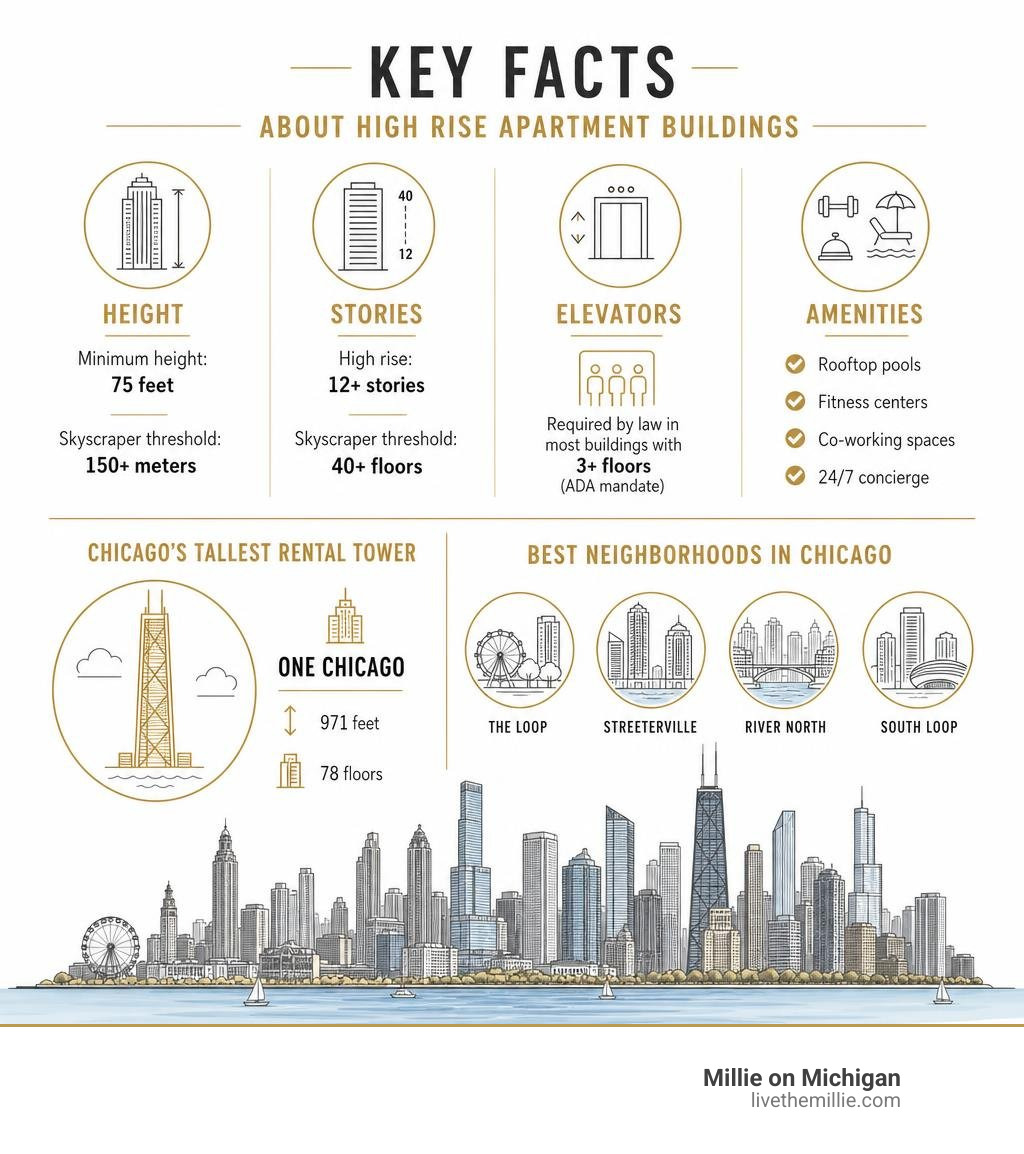
- Minimum height: 12 stories (industry standard) or 75 feet (NFPA fire safety definition)
- Skyscraper threshold: 40+ floors or 150+ meters
- Elevators: Required by law in most buildings with 3+ floors (ADA mandate)
- Common amenities: Rooftop pools, fitness centers, co-working spaces, 24/7 concierge
- Best neighborhoods in Chicago: The Loop, Streeterville, River North, South Loop
Imagine sipping your morning coffee while watching the sun rise over Lake Michigan from a 30th-floor living room. That's the promise of high-rise living — and for urban professionals who want a premium address with everything within reach, it's hard to beat.
Chicago has a deep connection to this style of living. The city essentially invented the modern skyscraper, and that DNA runs through every tower that lines its riverfront and lakefront today.
Whether you're drawn to the sweeping river views, the resort-style amenities, or simply the prestige of a downtown address, this guide covers everything you need to make a confident decision.
What Defines Modern High Rise Apartment Buildings?
To truly appreciate high rise apartment buildings, we have to look beyond their impressive silhouettes against the skyline. While a casual observer might call any tall building a high-rise, structural engineers, urban planners, and safety organizations use specific metrics to classify these vertical structures.
Generally, the residential real estate industry defines a high-rise as any building standing at least 12 stories tall. However, the National Fire Protection Association (NFPA) sets a more precise safety-based threshold: any structure taller than 75 feet (approximately 23 meters) above the lowest level of fire department vehicle access is classified as a high-rise. This 75-foot benchmark is historically tied to the maximum reach of standard fire department turntable ladders. Once a building surpasses this height, it requires specialized internal safety systems, such as pressurized stairwells and integrated standpipes.
Another defining characteristic of the modern high-rise is vertical accessibility. Thanks to the Americans with Disabilities Act (ADA), any multi-story residential building with three or more floors is legally mandated to feature reliable elevator access. In a true high-rise, these aren't just standard elevators—they are high-speed systems engineered to transport hundreds of residents smoothly across dozens of floors every single day.

Architectural Evolution of High Rise Apartment Buildings
To understand how we arrived at today's soaring glass towers, we must look back to the late 19th century. Following the Great Chicago Fire of 1871, the city faced a massive rebuilding effort. With land in the downtown core at a premium, architects had to think vertically.
In 1885, Chicago’s Home Insurance Building made history. Standing at just 10 stories tall, it was the first building to utilize a load-bearing structural steel frame rather than heavy masonry walls. This engineering breakthrough paved the way for the modern skyscraper.
Building on Chicago's notoriously soft, squishy clay soil presented another challenge for early architects. To support these massive vertical loads, engineers developed the "Chicago caisson"—a system of deep concrete piers sunk all the way down to bedrock. This innovation allowed buildings to reach unprecedented heights.
Over the decades, these architectural advancements transformed simple apartment blocks into cohesive "vertical communities." Modern towers are no longer just places to sleep; they are self-contained ecosystems where residents can live, work, socialize, and play without ever stepping outside the front doors.
High-Rise Structural and Engineering Standards
The structural integrity of modern high rise apartment buildings relies on advanced engineering and premium materials. While low-rise and garden-style apartments are often constructed using wood frames, high-rises utilize high-strength reinforced concrete and structural steel.
Concrete-frame construction is particularly popular in residential high-rises because it provides superior sound insulation between floors—meaning you won't have to worry about hearing your upstairs neighbor's morning routine. Additionally, modern towers are designed to withstand intense wind forces. High-rises are engineered to flex slightly in high winds, utilizing tuned mass dampers and aerodynamic curved profiles to minimize sway and ensure resident comfort.
To help you understand how these buildings are categorized in the market, here is a breakdown of the standard building classifications:
| Feature | Class A | Class B | Class C |
|---|---|---|---|
| Age & Condition | Brand new or recently renovated; pristine condition. | Typically 15–25 years old; well-maintained. | Older than 25 years; functional but dated. |
| Construction | Cutting-edge steel/glass; modern architectural design. | Sturdy concrete/brick; classic structural design. | Traditional masonry; basic finishes. |
| Amenities | Multi-floor wellness centers, rooftop pools, 24/7 concierge. | Moderate amenities; standard fitness center, shared patio. | Minimal shared spaces; laundry room, basic lobby. |
| Technology | Smart-home integration, LEED-certified systems, EV charging. | Standard electronic access, updated HVAC. | Manual entry systems, older utility infrastructure. |
The Lifestyle Benefits of Vertical Living
There is an undeniable allure to living high above the bustling city streets. Choosing a home in a premium high-rise offers a unique lifestyle that balances privacy with vibrant community energy.
The most immediate benefit of high-rise living is the visual landscape. Whether you are looking out over the glittering downtown skyline or enjoying a peaceful river view, the vistas from upper-floor apartments are unmatched. Living along the water provides a soothing backdrop of river side views that change with the seasons, offering a tranquil escape from the urban hustle.
Beyond the views, high-rise living delivers peace of mind. Modern residential towers prioritize resident safety with sophisticated security measures. From secure keycard-access elevators to 24/7 lobby staff and on-site concierge services, you can rest easy knowing your home is well-protected. A dedicated front desk team also means your packages are securely received and stored until you are ready to pick them up.
To learn more about what makes this lifestyle so special, explore our detailed guide on the Benefits of Living in High Rise Apartment Buildings and discover the true meaning of High Rise Luxury.
Premium Amenities in Luxury High Rise Apartment Buildings
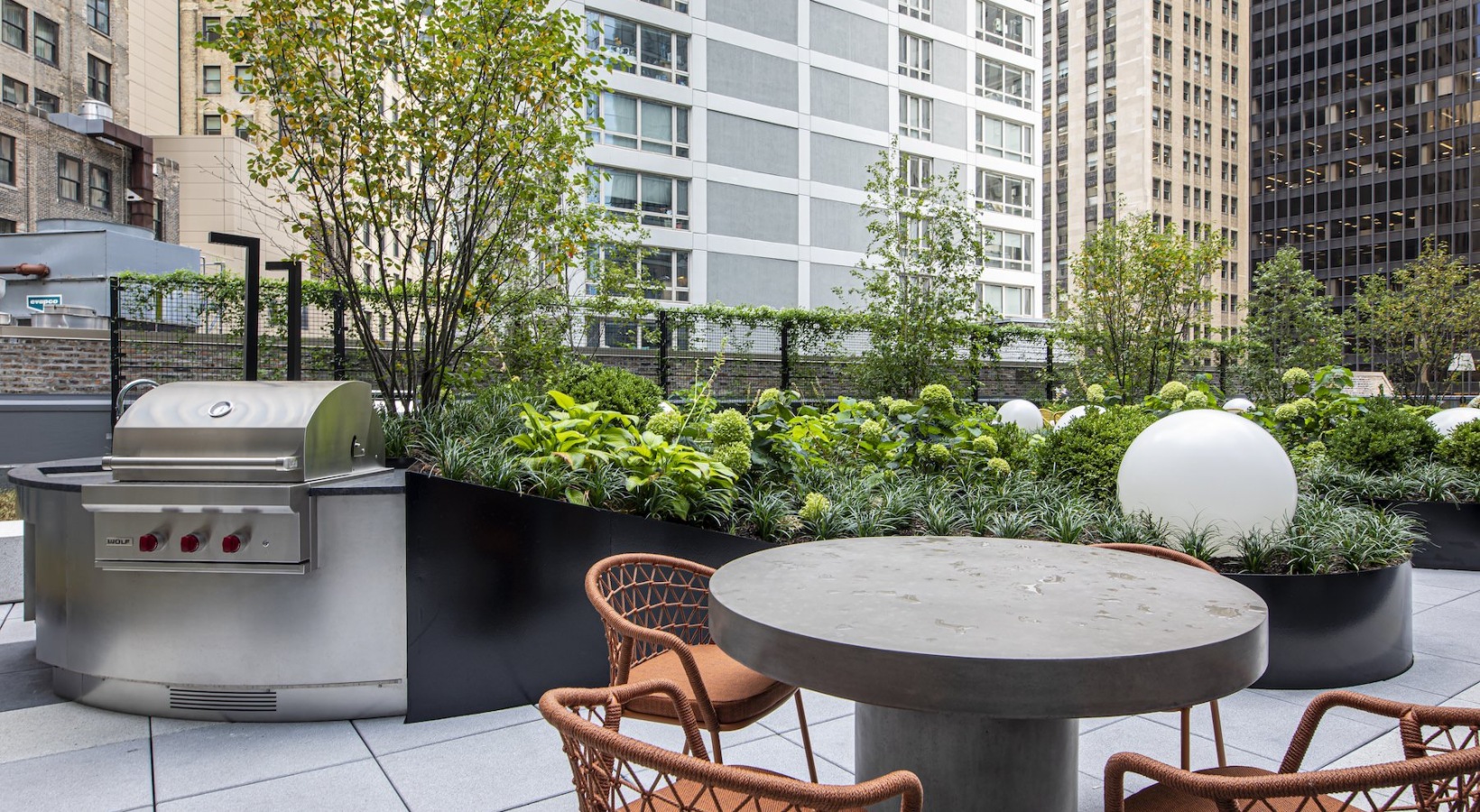
When you choose a luxury high-rise, your living space expands far beyond the four walls of your individual apartment. Modern developments are designed to offer a resort-style experience right at home.
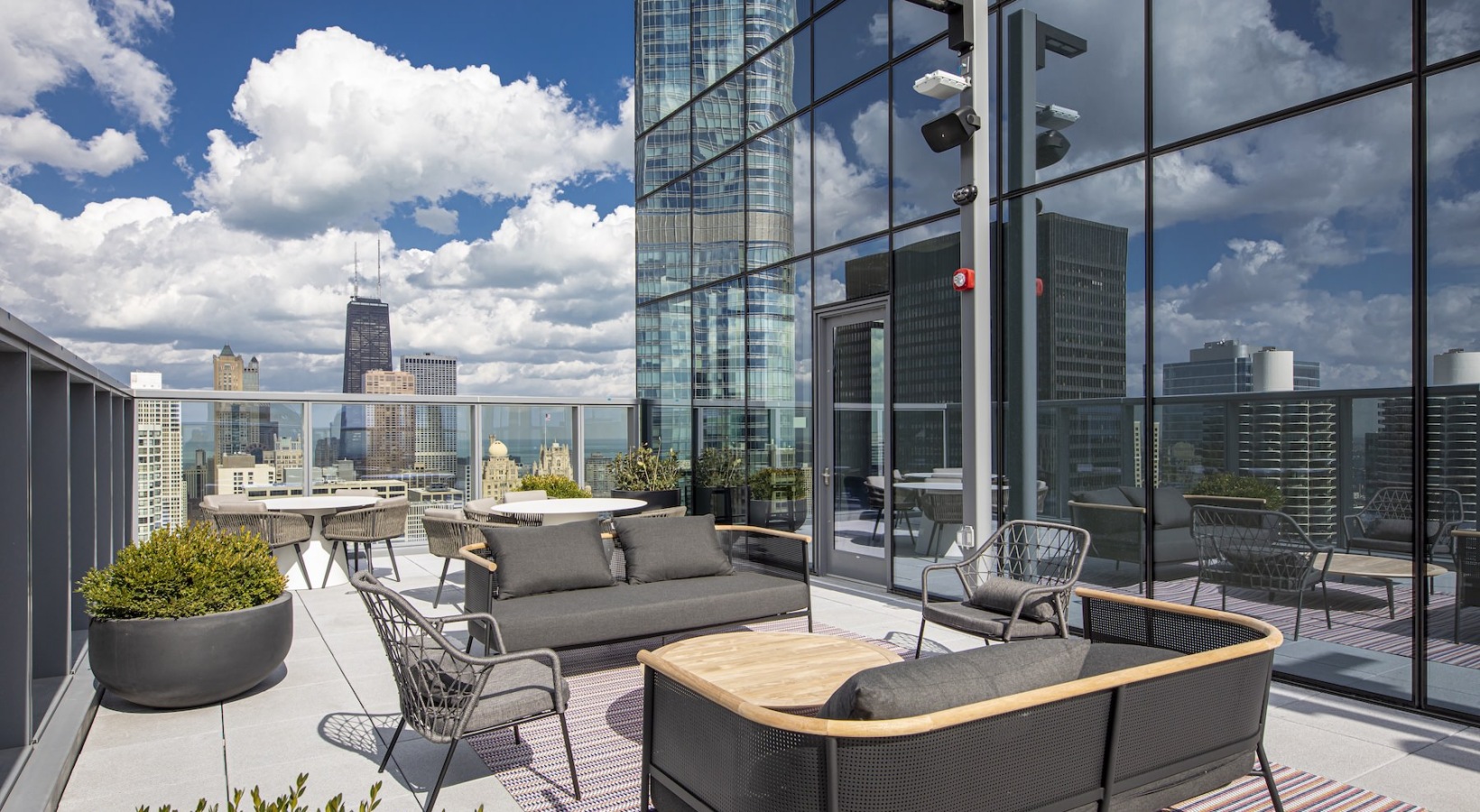
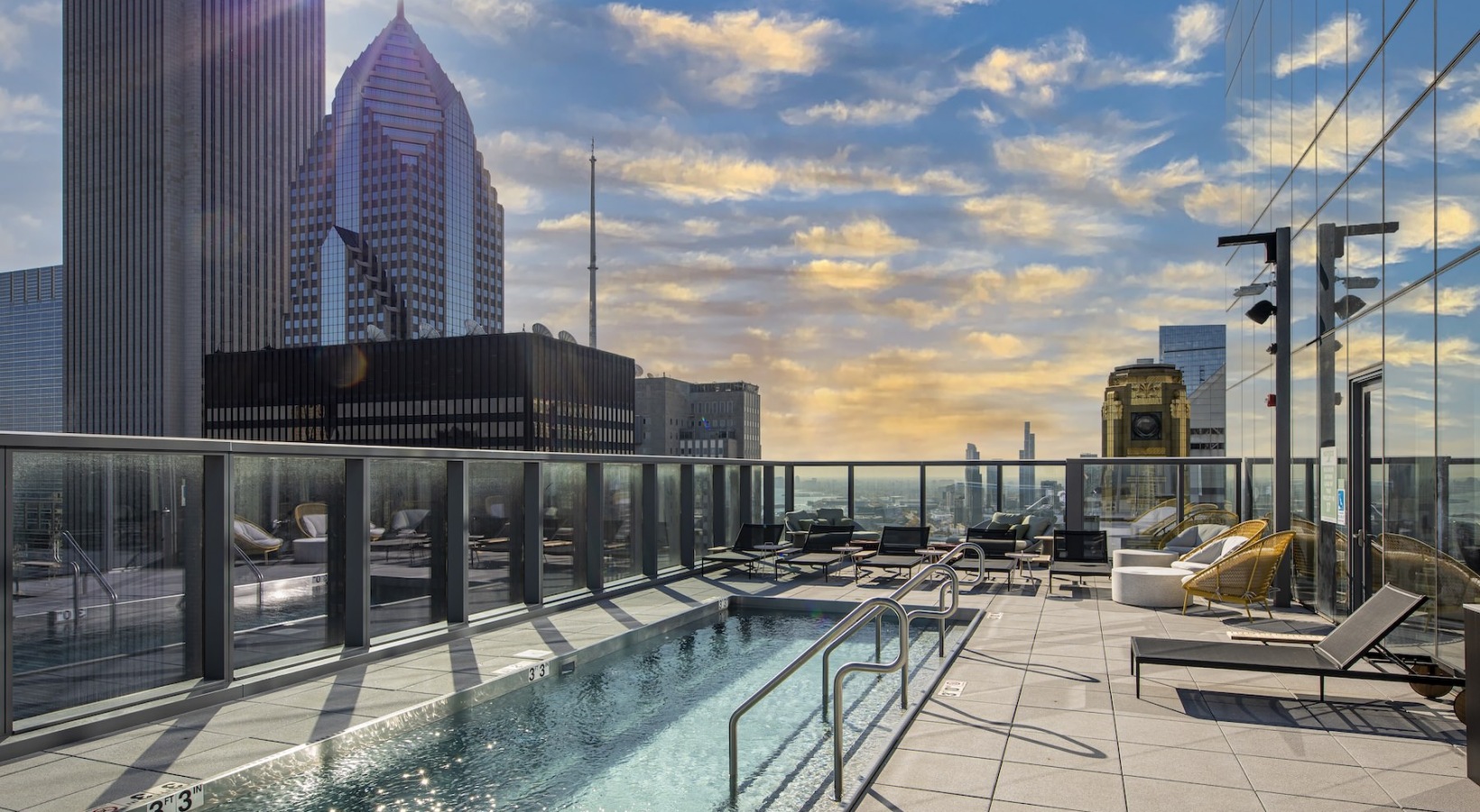
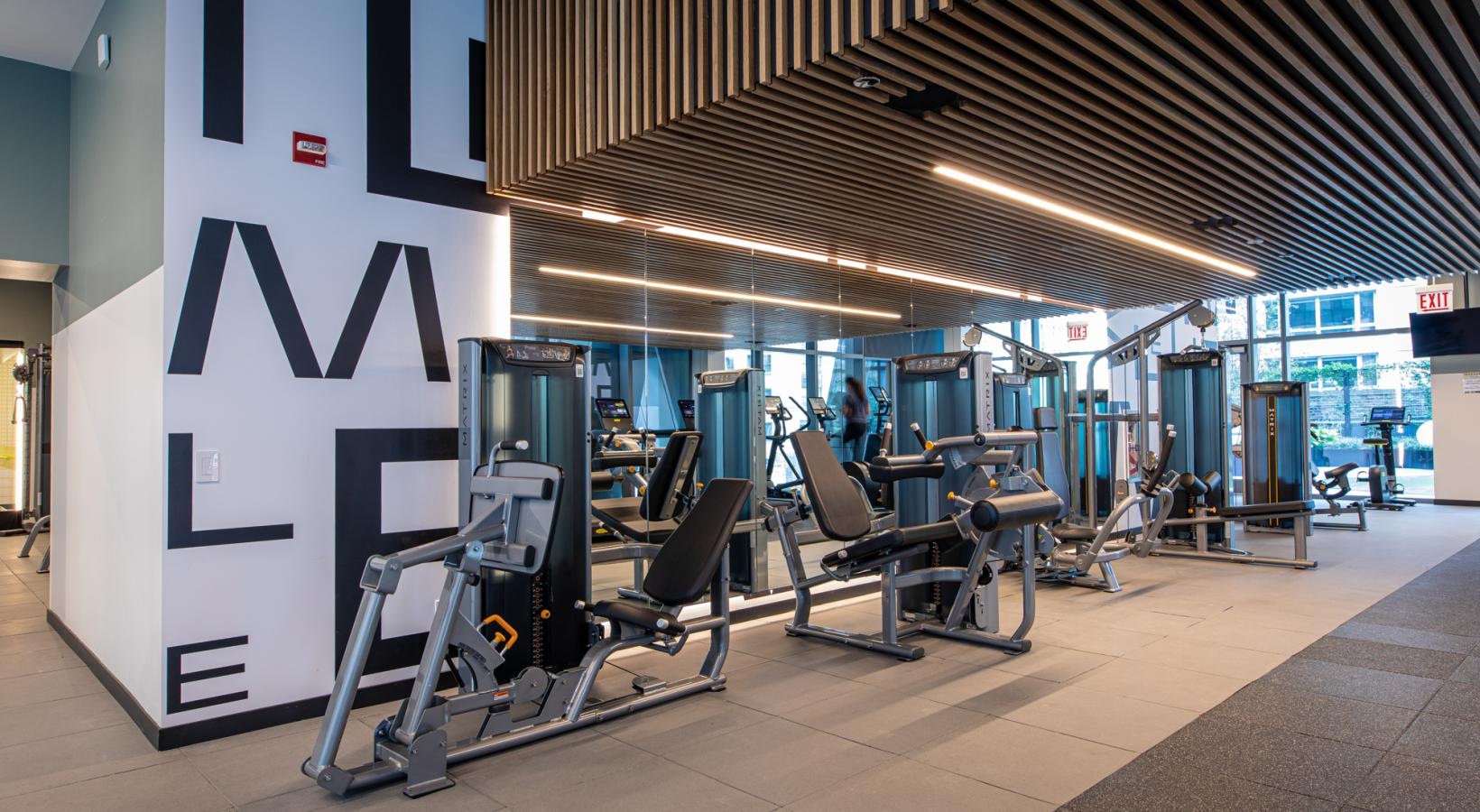
Rooftop pools and sun decks serve as social hubs during the warmer months, while sophisticated sky lounges offer space to entertain guests against a backdrop of panoramic city views. For wellness enthusiasts, state-of-the-art fitness centers often feature dedicated yoga and Pilates studios, saving you a trip to an external gym.
Remote professionals can take advantage of fully equipped co-working spaces, private meeting rooms, and high-speed Wi-Fi throughout the common areas. Pet owners are also well-catered to, with many luxury buildings offering panoramic on-site dog runs and professional pet washing stations—though most properties maintain a standard pet policy limiting residents to a maximum of two pets per apartment to keep the community comfortable for everyone.
Finally, daily convenience is elevated through integrated retail spaces. Many premium towers feature ground-floor grocery stores, cafes, and boutiques, allowing you to run errands or grab your morning latte via a direct elevator ride.
Navigating the Chicago High-Rise Market
If you are looking to experience high-rise living firsthand, there is no better place to start than the heart of Chicago. The downtown rental market offers an incredible array of options, each defined by its unique neighborhood personality and architectural style.

When searching for the perfect home, focusing on Downtown Chicago and The Loop puts you at the center of the action. This area is home to iconic architecture, world-class cultural institutions, and beautiful riverfront paths. If you love being near the water, choosing a building in River North or Streeterville allows you to enjoy stunning river views and easy access to the lakefront.
For those who want a blend of historic charm and modern luxury, the South Loop offers expansive parks and proximity to Museum Campus. To dive deeper into these vibrant urban enclaves, check out our guide on High Rise Apartments Downtown Chicago and read through our High Rise Downtown Chicago Ultimate Guide to find the neighborhood that perfectly matches your lifestyle.
Best Times to Search and Lease
Timing your apartment search can make a significant difference in your renting experience. In Chicago, the rental market is highly seasonal, dictated largely by the midwestern weather.
The peak leasing season runs from late spring through the end of summer. During these warmer months, you will find the largest selection of available homes, but the competition among renters is also at its highest. If you prefer a more relaxed search process, consider looking for your new home during the winter months.
Searching for an apartment between November and February often gives you more negotiating power with leasing offices. Furthermore, moving into a high-rise during a cold Chicago winter is surprisingly convenient. Unlike low-rise walk-ups where you have to carry furniture up icy outdoor stairs, modern high-rises feature covered, indoor loading docks and large freight elevators, protecting you and your belongings from the winter elements.
To start exploring available homes near your preferred location, take a look at our curated listings of High Rise Apartments Near Me.
Frequently Asked Questions about High-Rise Living
What is the difference between a high-rise and a skyscraper?
While both terms refer to tall structures, they are defined by different height thresholds. A high-rise is generally any building over 12 stories or 75 feet tall. A skyscraper is a specific subcategory of high-rise: a building that stands at least 40 stories tall or reaches a minimum height of 150 meters (approximately 492 feet). In short, all skyscrapers are high-rises, but only the tallest high-rises qualify as skyscrapers.
Do high-rise apartments have higher utility bills?
Utility costs in a high-rise depend largely on the building's age and construction materials. Older towers with extensive glass facades can sometimes experience more heat loss in the winter and heat gain in the summer, leading to higher heating and cooling demands. However, modern luxury high-rises are built with energy efficiency in mind. Many newer buildings feature high-performance double-paned glass and are LEED-certified, which helps regulate indoor temperatures naturally and keep utility costs predictable.
How do high-rise buildings handle emergency evacuations?
High-rise buildings are engineered with sophisticated, redundant safety systems designed to protect residents in an emergency. Because standard fire department ladders cannot reach the upper floors of a tower, high-rises are equipped with internal wet standpipes, automatic sprinkler systems, and fire-rated concrete barriers that prevent fire from spreading between units. In the event of an evacuation, buildings utilize pressurized stairwells—which use fans to keep smoke out of the escape routes—and clear emergency broadcast systems to guide residents safely to ground level.
Conclusion
Choosing a home in a modern high-rise is about more than just finding a place to live—it is about embracing a dynamic, elevated lifestyle where convenience, luxury, and breathtaking views come together seamlessly.
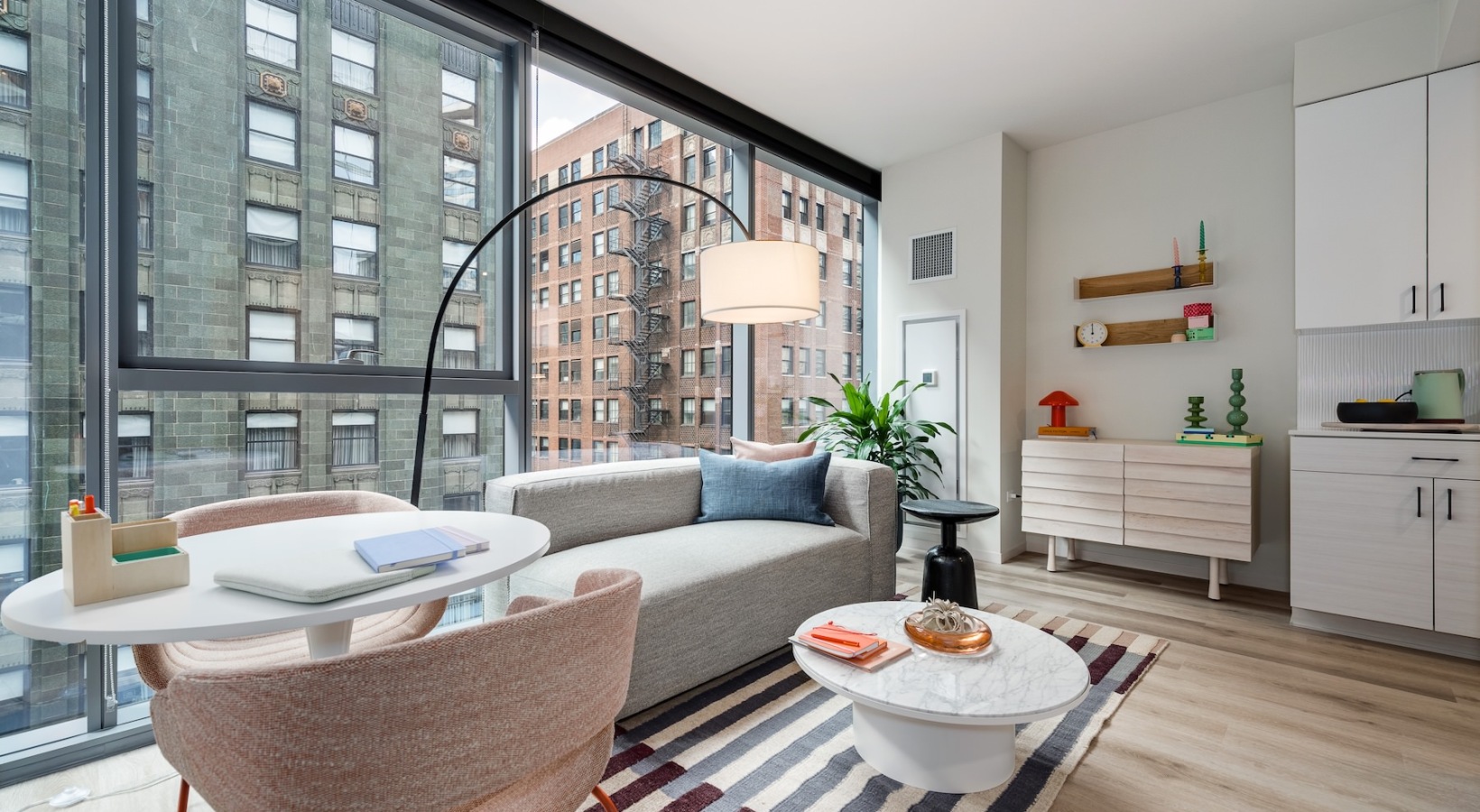
If you are ready to experience the very best of vertical living in Chicago, we invite you to discover Millie on Michigan. Located in the heart of the vibrant Streeterville neighborhood, just steps from the legendary Magnificent Mile, our luxury tower offers beautifully designed studio, 1-bedroom, and 2-bedroom apartments. Residents enjoy resort-style amenities, modern interiors, and stunning, uninterrupted views of the city skyline and Lake Michigan.
Ready to find your perfect view? Explore our Streeterville High Rise Apartments Ultimate Guide or contact our leasing team today at https://livethemillie.com/p/high-rise-apartments-downtown-chicago/ to schedule your private tour.